AQUILEIA I. Origins of Christianity – II. Council. I. Origins of Christianity. Tradition indicates St. Mark as the founder of the church of Aquileia; he is said to have consecrated its first bishop, Hermacoras, martyred with the deacon Fortunatus. This information is first noted faintly only with Paul the Deacon 786 and is developed in the Passio sanctorum martyrum Hermagorae et Fortunati, an echo of which is in the acts of the Council of Mantua of 827. This tradition, unknown to the writers of Christian antiquity Chromatius, Jerome, Rufinus, Venantius Fortunatus, can be explained by Aquileia’s undoubted liturgical links with the church of Alexandria in Egypt of which St. Mark was considered the founder, favored by strong commercial relations. Although a protobishop, Hermacoras’s name which was handed down to us in the late episcopal catalogs 11th c., of which, unfortunately, we do not know the sources can be accepted along with other names, like those of his two successors Hilary and Chrysogonus whose names attest to a notable presence of Easterners in Aquileia. In any case, if we consider the question of early Aquileian Christianity qualitatively and focus on the spiritual level, the Aquileian Creed passed down to us by Rufinus seems to testify, precisely by its peculiarities, an especially notable Jewish Christian conceptual inspiration, which would place it chronologically in the very beginnings of evangelization. The known martyrs are recognized in their relics Cantius, Cantianus and Cantianilla or in other evidence, such as Protus, Chrysogonus, Hilary and Tatian. The cult of Felix and Fortunatus is attested by Bishop Chromatius Sermo VII and Venantius Fortunatus Carmina VIII, 3. Theodore was the fifth bishop among those listed in the episcopal catalogs; his name is in two epigraphs in the oldest church buildings known in Aquileia and in the Po Valley and is among the bishops who subscribed to the acts of the Council of Arles 314. The church must be ascribed to a similar date: 37.4 67.5 meters, it contains three rooms arranged in a U-shape one for instruction, the parallel one for worship and one connecting them a consignatorium?; there are also a baptistery and other rooms living quarters?. The two parallel rooms have an exceptional mosaic floor, in which the forms of a culture founded on sculptural and color values various animal and plant decorations coexisted with the Constantinian taste for lively, but formally rigid, narrative portraits, the story of Jonah, marine background. The mosaic is nearly intact in the S basilica more than 700 sq. m., but only partly in the N. Built over the Theodorian basilicas, which arose near the walls of functional buildings near the city wall and over a noble Roman domus, were others: the post-Theodorian basilica, mid 4th c., tripartite 31 72 m., with geometrical mosaic, baptistery hexagonal stellar font and atrium, over the area of the N basilica and supposed consignatorium the S basilica remained in use and perhaps held the Council of 381; the Chromatian basilica, early 5th c., 29 65 m., over the S basilica, with octagonal baptistery on the axis. Over it after a post-Attilan restoration are the Carolingian basilica and that of the patriarch Poppo 1031. Other suburban basilicas are: to the NE, that of Monastero early 5th c., with an almost intact geometrical mosaic floor 19 58 m. with the inscriptions of many Eastern donors; it also shows successive early Christian and early medieval phases and now houses the Early Christian Museum; that of the fondo Tullio, perhaps the Apostoleion, crossshaped with a large ambulatory around the apse, and a floor mosaic with 12 lambs among vine volutes, located beside the Via Giulia Augusta, as was that over the tomb of Sts. Felix and Fortunatus, demolished in the late 18th c. the first cemetery of the Aquileian church? Around these basilicas were cemeteries, not yet properly investigated, containing numerous 4th- and 5th-c. epigraphs the oldest from 336. Also noteworthy are the octagonal chapel recognized on the spot where St. Hilary was probably arrested, a trichorate cell near the port warehouses and the apsed rooms with mosaics of symbolic subjects Good Shepherd, Good Shepherd in singular dress, fishing, thought to be private oratories. Besides inscriptions, often with delightful representational graffiti esp. those with scenes of baptism and refrigerium, we should mention the following: a relief with the heads of Peter and Paul, various sarcophagus fragments one with the traditio legis, a large circular bronze lampstand with two orders of arms 12 and 7 supported by bronze chains a great hanging bronze christogram is now at Modena, a distinctive monogrammatic cross now at Vienna, two silver spoons with chrismon, two gilt glasses, many typical lamps and figured Samian ware. Aquileia is complemented by S. Canzian d’Isonzo, on the Via Gemina, with remains of a 4th-c. rectangular memorial dedicated to St. Protus and elements of a 4th-6th-c. basilica over the tomb of the Cantian saints, martyred in 304. K. v. Lanckoronski, Der Dom von Aquileia, Vienna 1906; var. aus., La basilica di Aquileia, Bologna 1933; M. Mirabella Roberti, Considerazioni sulle aule teodoriane di Aquileia, in Studi Aquileiesi offerti a G. Brusin, Padua 1953, 209-244; G. Brusin – P.L. Zovatto, Monumenti paleocristiani di Aquileia e di Grado, Udine 1957; S. Tavano, Aquileia cristiana, Udine 1972 AAAd 3; G. Biasutti, Aquileia e la Chiesa di Alessandria: AAAd 12 1977 215-229; G. Cuscito, Cristianesimo antico ad Aquileia e in Istria, Trieste 1977; S. Tavano, Aquileia, guida dei monumenti cristiani, Udine 1977; var. aus., Da Aquileia a Venezia, Milan 1980; G. Cuscito, Cromazio di Aquileia 388408 e l’et sua, Aquileia 1980; Id., Fede e politica ad Aquileia: dibattito teologico e centri di potere secoli IV-VI, Udine 1987; Id., Martiri cristiani ad Aquileia e in Istria. Documenti archeologici e questioni agiografiche, Udine 1992; R. Bratz, Il cristianesimo aquileiese prima di Costantino fra Aquileia e Petovio, Udine 1999; var. aus., Aquileia romana e cristiana fra II e V secolo, Trieste 2000 AAAd 47; var. aus., Aquileia e il suo patriarcato. Atti del Convegno Internazionale di Studio, Udine 2000; G. Cuscito, Orientalit del primo cristianesimo aquileiese. Problemi e ipotesi: VetChr 39 2002 223-233; Id., Il cristianesimo ad Aquileia dalle origini al ducato longobardo: AAAd 54 2003. M. Mirabella Roberti II. Council. The plan to convoke a general council, attributable essentially to the initiative of the emperors at the end of 380, was modified a few months later because Theodosius decided to hold a separate council of Eastern bishops at Constantinople, and Gratian accepted Ambrose’s proposal to hold a council for the West in the metropolis on the upper Adriatic because of its geographic location, and perhaps also because of Bishop Valerian’s vigorous stand for orthodoxy after the ambiguous attitudes of his predecessor Fortunatus. Thus on 3 September 381, two months after the close of the first Council of Constantinople, 32 bishops met at Aquileia under Valerian’s presidency to confirm the consubstantiality and coeternity of the Father and the Son, according to Nicene faith, and to condemn the last followers of Illyrian Arianism: the bishops Palladius of Ratiaria now Arcer, Bulgaria and Secundanius of Singidunum Belgrade, and the presbyter Attalus, a follower of Julianus Valens, Arian bishop of Petovium who had failed to turn up at the council and continued to support the Arian party in N Italy. Since the accused claimed not to recognize Arius as the author of their faith, but to profess the original faith founded on the Scriptures, Ambrose judged it opportune to submit to them the letter Arius had written to his own bishop Alexander of Alexandria ca. 322 which, softening as it did his earlier extremism, had been the manifesto of Arian doctrine. Thus the essence of the conciliar debate was the verification of Arius’s statement solely on the basis of Scripture, to which both parties appealed as the supreme rule of faith. Ambrose demolished one by one all the texts cited by his opponents and adduced as counterproof passages affirming the eternity, immortality, uncreated wisdom and equality of Jesus Christ, considered in his divine nature, with the Father. The Arians did not yield to the evidence or disavow Arius, however, and had recourse to pretexts: they denied the assembly’s competence to pass judgment on their faith and, if it was to be a trial rather than a council, demanded arbitration outside ecclesiastical jurisdiction. Ambrose indignantly rejected the proposal and, recognizing the futility of relying on a discussion of biblical texts, decided to end the debate and pronounce sentence: deposition from the episcopate. The conciliar acts, copied by Ambrose’s orders, are punctuated by anathemas that, though adding nothing new to christological and trinitarian reflection, specify in terse formulas the doctrinal nucleus defended by the Nicenes. The weight of the accusation was sustained by Ambrose and aided by Eusebius of Bologna, with interventions by others being rare; those of Sabinus of Piacenza were nearly always procedural. The text of the debate has reached us through a small number of MSS dependent on the copy of a precious codex from the first half of the 5th c., Parisinus 8907, in whose margins are recorded Arian comments and observations, last edited by R. Gryson. Thanks to the incomparable evidence thus handed down, it must be recognized that the Council of Aquileia, unlike that of Constantinople I, which was indissolubly tied to the formula of the creed, left room for an open confrontation between the parties and, beyond its at times judicial appearance, was a timely moment of maturation on the doctrinal and organizational level. PL 16, 16-939 = PL 62, 433-455; PL 16, 980-990 the three synodals to the emperors; Scolies ariennes sur le concile d’Aquile, intr., texte latin et notes par R. Gryson, SC 267, Paris 1980 the council’s Acts in appendix; M. Zelzer, CSEL 823 crit. ed. of the Acts; var. aus., Il concilio di Aquileia del 381 nel XVI centenario, Udine 1980; var. aus., Atti del colloquio internazionale sul concilio di Aquileia del 381, Udine 1981 AAAd 21; Y.M. Duval, La prsentation arienne du concile d’Aquile de 381: RHE 76 1981 317-331; G. Cuscito, Il concilio di Aquileia 381 e le sue fonti: AAAd 22 1982 189-253.Aquileia, the Ruins and the Basilica – UNESCO World Heritage Sites … travelquaz
AQUILEIA Photo Gallery
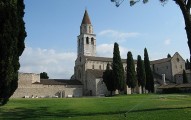
UNESCO CITIES MARATHON 2015, CIVIDALE, PALMANOVA, AQUILEIA, UDINE … travelquaz

Help our schools discover Aquileia by Peter W Marshall – GoFundMe travelquaz

Aquileia travelquaz

The mosaics in Aquileia’s Basilica of Santa Maria Assunta … travelquaz

Maybe You Like Them Too
- Palace Of Versailles Kingdom Of The Sun King
- Rio de Janeiro Help Disco
- Rio de Janeiro
- Sex Tourism Travel
- Curacao Map