APOSTOLICITY. The ancient patristic tradition distinguished apostolicity of ecclesiastical office from that of doctrine. A ministry is apostolic because 1 it has the task of building on the foundation of the apostolic gospel; 2 in the accomplishment of this task it follows certain norms established, based on the gospel, by the apostolic witnesses of the first generation see Roloff 363-379; and 3 the church that considers itself apostolic is convinced of its continuity in mission and succession from the first apostolic generation. One notes throughout the entire apostolic and postapostolic period the strong consciousness of all the faithful of belonging to the one church of Jesus Christ see Hahn 76-94. Paul’s incorporation into the recognized and normative apostolic tradition is among the most important decisions made by the early church. The church’s path to this incorporation builds from Luke-Acts through the so-called deutero- Paulines, the Pastoral Epistles and 2 Pet, to arrive at 1 Clem., in which the two great martyrs Peter and Paul are thought of together 1 Clem. 5, a notion from which will derive, among other things, the special position of the apostolic foundation of Rome Irenaeus, Adv. haer. III, 3, 2; Tertullian, Praescr. haer. 36. Paul’s incorporation finds its peculiar expression in the church’s canonization of the Pauline and deutero-Pauline writings Bienert 16-17. 1 Clem. 42, 1; 43, 3-4; 44, 1-2 bases the apostolic office on the link with the apostles and with Christ, using the Judaic theory of succession. Episcopal office and the succession to it of proven men were ancient, and this, for 1 Clem., meant apostolic right. Apostolicity represented the organic link between the head of the church and the historical church, in both discipline and teaching. Irenaeus Adv. haer. I, 27; III, 3, 1-3 makes episcopal succession go back to the apostles. Tertullian Praescr. 2 1,4; 37,1 and Cyprian Ep. 37, 15 went back to the origin of the church and its founder through the doctrine and discipline transmitted by the apostles. Faced with schismatics whose beliefs were uncontestable, Cyprian Ep. 8,1; 59,5; 69,5 turned to the episcopate as the principle of unity in the church: bishops occupied the place of the apostles, succeeding them in a direct line and, like them, were instituted by the Lord: the apostles themselves were the first bishops. Cyprian sees the institution of the bishops in Mt 16:18-19; Jn 20:21-22 De unitate eccl. 4. The authority of a series of anonymous Ecclesiastical Constitutions were also made to depend on the supposition that they were of apostolic origin Did., tit.; Apos. Con., tit., I, inscr.; II, 26,7; 28,4; 39,1, etc.. 1 Clem. 44 appealed to the apostolic origin of the episcopal office when disputes arose over removing those who occupied it. Polycarp Ep. 3,2; 6,3; 9,1 did the same regarding the validity of doctrine in dispute. The apostolicity of transmitted doctrine was seen as the criterion for settling doctrinal differences within the church, and for avoiding the gnostic peril, a criterion suitable for both ecclesiastical pseudepigrapha and heretical apocrypha Eus., HE III, 25,6. Justin Martyr 1 Apol. 42,4 referred his theology to the preaching of the apostles, which he claimed was the same everywhere: it was they who recorded everything about the Savior 1 Apol. 33,5, and their authority extended to their written memories Dial. 103,8. By turning to the beginnings of the faith as the only sure guarantee, one arrived at the conviction that Christianity had had a single originating figure Ep. Apost. 1, Ethiop.. Both 2 Clem. 14,2 and Hermas Sim. IX, 15,4; 16,5; 17,1; 25,2 appealed to the authority of the apostles to guarantee their different theologies. The author of Diogn. 11,1.6 claims to be a disciple of the apostles in the church that preserves their tradition. Irenaeus Haer. I, 10,1-2; III, Praef.; 3,1-3; 4,1 stresses that the universal church received its faith from the apostles and from their disciples and that, for its proper explanation, one must go back to the oldest churches, where they had worked. Tertullian too Apol. 47; Praesc. 21,37 spoke of the rule of faith that comes from Christ and was transmitted by his disciples. The conviction that the rule of faith, believed in and taught in the Catholic church, had been inherited from the apostles gave origin to the legend that the twelve apostles compiled the Symbolum Apostolorum a formula which came to us from the ancient Roman baptismal creed; see Apostles’ Creed. The title is found in Ambrose Ep. 42,5 and the account in Rufinus Comm. in symb. apost. 2. The 4th-c. creeds and professions of faith Alexander of Alexandria, Nicaea- Constantinople, Damasus, Epiphanius, Const. App. VII, 41 include the character apostolic as a mark of the church. G.L. Hahn, Bibliothek der Symbole and Glaubensregeln der Alten Kirche, Breslau 3 1897 Hildesheim 1962; P. Meinhold, Geschehen und Deutung im ersten Clemensbrief: ZKG 58 1939 82-129; J.N.D. Kelly, Early Christians Creeds, London 2 1960; Id., Early Christian Doctrines, London 1960; A. Benoit, L’apostolicit au second si¨cle: Ver Caro 15 1961 173-184; W. Schneemelcher, Zur Entstehung pseudoapostolischer Literatur, Hennecke – Schneemelcher 2, T¼bingen 1964, 8-10; M. Hornschuh, Die Apostel als Tr¤ger der berlieferung, ibid., 41-52; J.N. Bakhuizen, Tradition and Authority in the Early Church, SP VII, TU 92, Berlin 1966, 3-22; F. Hahn, Das apostolische und das nachapostolische Zeitalter als kumenisches Problem, in Exegetische Beitr¤ge zum kumenischen Gespr¤ch. Gesammelte Aufs¤tze, 1, Gttingen 1986, 76-94; K. Haacker, Verwendung und Vermeidung des Apostelbegriffs im lukanischen Werk: NovT 30 1988 9-38; W.A. Bienert, Das Apostelbild in der altchristlichen berlieferung, in W. Schneemelcher, Neutestamentliche Apokryphen in deutscher bersetzung. II. Apostolisches, Apokalypsen und Verwandtes, T¼bingen 5 1989, 6-28; J. Roloff, Die Apostolizit¤t der Kirche und das kirchliches Amt nach dem Zeugnis der Heiligen Schrift, in Exegetische Verantwortung in der Kirche. Aufs¤- tze, Gttingen 1990, 363-379. My Catholic Faith – Chapter 53 – The Catholic Church: Catholicity … travelquaz
APOSTOLICITY Photo Gallery
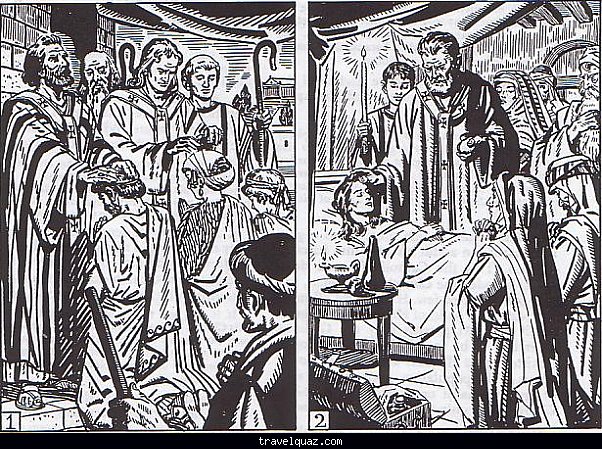
The Apostolicity of the Church travelquaz

Apostolicity the One Papa Summus Pontifex Pontifex Maximus Servus … travelquaz

Maybe You Like Them Too
- A PLANNER’S TOP LOCATION TIPS
- Beverly Hills Hotel, LOS ANGELES
- Palace Of Versailles Kingdom Of The Sun King
- Rio de Janeiro Help Disco
- Rio de Janeiro