APOLLINARIS of Laodicea APOLLINARIANISM In 363 Apollinaris presented Julian’s old officer Jovian Lietzmann 250-253 with his profession of faith, in perfect order like the other regional bishops. While Athanasius, also present at Antioch, confined himself to handing over a copy of the Nicene formula with a short commentary, Apollinaris felt it his duty to give that formula a wholly personal cast which shows that the basic ideas of heretical Apollinarianism were already clearly defined in his thought. On the level of church politics, he immediately scored some important points. It is probable that ca. 372 one of his disciples, Timothy, for whom he had obtained a letter of recommendation from Athanasius, was recognized at Rome by Pope Damasus. Similarly in 375 another disciple, Vitalis, a deserter from Meletius’s party, obtained a certificate of orthodoxy from Damasus. In 376, however, the pope attempted to impose on Vitalis a form of union with Paulinus. Vitalis’s election as bishop must have occurred in that year, and this risky undertaking turned Apollinaris’s friend Basil of Caesarea, and Damasus himself, against him. Probably in 377, Timothy was censured at Rome; at that time Jerome was still following Apollinaris’s courses at Antioch. The Roman censure, however, extended to Apollinarianism as such, was confirmed at Antioch in 379 and at Constantinople in 381 can. 1. While the Apollinarists organized synods of their own, first at Antioch in 379 and certainly in 382 at Nazianzus Greg. Naz., Ep. 101, where they also enthroned one of their own as bishop Greg. Naz., Ep. 125, a Roman synod in 382 repeated the condemnation with greater force. In the same year Gregory of Nyssa became acquainted with Apollinarianism during a trip to Jerusalem, and soon after returning to Cappadocia undertook to refute it in his Antirrheticus, though he had never met Apollinaris personally. In 387 Gregory of Nazianzus begged Bishop Nectarius of Constantinople to exhort the emperor Theodosius to resist by force the Apollinarists, who were trying to place one of their own men in the see of Nazianzus, where Gregory had provisionally replaced the late bishop. He had made a similar request in 385 or 386 to Theophilus of Alexandria. The first imperial decrees against the Apollinarists were issued in 388 CTh XVI, 5, 14, 15, without, however, Vitalis losing his episcopal see. Apollinaris died before 392. The Apollinarist community of Antioch rejoined the orthodox only in 425 Theod., HE V, 38,2; traces of this heresy remained in the East until the second half of the 5th c. Apollinaris’s writings, saved from destruction thanks to literary falsifications denounced from earliest times, occupy 50 numbers of the CPG II, 3645-3695; they are essentially dedicated to the theological formulation of the dogma of the incarnation of God. Some of Apollinaris’s apologetic works, such as his 30-vol. treatise against Porphyry and his apology against Julian and the Greek philosophers, have been completely destroyed. Numerous citations of his biblical exegesis have been preserved in catenae. Jerome mentions commentaries on Eccl, Is, Hos, Mal, Ps, Mt, 1 Cor, Gal and Eph. Exegetical extracts on Pr, Song, Is, Ez, Dan and Lk have been published. Critical editions have verified the fragments on the Octateuch, Ps, Mt, Jas and Rom. There are also fragments on Job and Jer. The most recent critical study of Apollinaris’s whole work is that of E. M¼hlenberg, who has also edited the fragments on the Psalms; the first part of this essay owes much to his notable summary in TRE of Apollinaris and his school. The formula mia physis tou theou logou sesarkomene is the most striking expression in the whole of Apollinaris’s doctrine Lietzmann 206,28, 251, 1. Cyril of Alexandria, deceived by some writings of Apollinaris transmitted under the name of his predecessor St. Athanasius, attributed them to the latter and interpreted them. In doing so he prepared the way that, from the 5th c., would link monophysitism to Apollinaris’s initial insights. Firm on the notion of physis, these insights departed from the identity of ousia and hypostasis, an identity preserved intact by both Apollinaris and Athanasius in the sphere of trinitarian doctrine. While he developed his theory on the relationship between the Father and the Son departing from a keen perception of their unity, Apollinaris reflected primarily on the essential unity of the Word made flesh, thinking of the theology of the incarnation. A long period of theoretical reflection, not yet well studied, preceded the explicit structure of his whole system. The recent identifcation of three Easter homilies of Apollinaris by E. Cattaneo sheds light on this first period of his curriculum. Directly following Athanasius, the position of nascent Apollinarianism has likewise been clarified by careful study of the ps.-? Athanasian third treatise Against the Arians H¼bner, Kannengiesser. Moreover, a genuine philosophical rigor, whose presuppositions, Aristotelian or otherwise, have been the object of several studies, guided the final exposition of Apollinaris’s Christology. Finally, the polemical context of the struggle against Arianism also played a role in his Christology’s final structure. Formulating Christ’s unity as his hypostasis, Apollinaris conceived the composite being of the Word made flesh as a substantial integration of the flesh with the Word. From Christ’s being he therefore excluded reason nous, or the higher soul, since this is a subject capable of self-determination. In the most rigorous sense he defined Christ as God incarnate, without yet possessing the idea of the hypostatic union of his two natures, which was not defined until later. In this way he provoked the doctrinal crisis at the end of which the great christological councils of Ephesus 431 and Chalcedon 451 defined the church’s faith once and for all. After Apollinaris’s death his disciples broke up: Vitalis of Antioch and Timothy of Berytus remained fairly close to the Great Church; Polemon and Julian radicalized the notion of the Word as the sole subject of Christ’s volition and action. Fully condemning the heresy that deprived Christ’s humanity of a true soul, Cyril of Alexandria, Philoxenus of Mabbug, Severus of Antioch and the monophysites in general were only minimally influenced by Apollinaris. CPG 3645-3700. Indispensable studies: TRE 3, 370-371 with bibl.; H. Lietzmann, Apollinaris v. Laodicea und seine Schule, T¼bingen 1904 – Hildesheim 1970; E. M¼hlenberg, Apoll. v. L. zu ps. 1-150: Psalmenkommentare aus der Katenen¼berlieferung 1, PTS 15 1975 1-118. Studies: G. Voisin, L’Apollinarisme. ‰tude historique, littraire et dogmatique sur le dbut des controverses christologiques au IVe si¨cle, Diss. Louvain-Paris 1901; G. Furlani, Studi apollinaristici I. La dottrina trinitaria di Apollinare di Laodicea: Riv. trim. di St. filos. rel. 2 1921 257-285; II. I presupposti psicologici della cristologia di Apoll. di L.: ibid. 4 1923 129-146; E. Raven, Apollinarianism: An Essay on the Christology of the Early Church, Cambridge 1923; M. Richard, L’introduction du mot hypostase dans la thologie de l’incarnation: MSR 2 1945 5-32, 243-270 Opera Minora II, n. 42; H. de Riedmatten, La christologie d’Apoll. de L., SP 2, TU 64 1957, 208-234; R. Cadiou, Apollinaire et l’Isa¯e de Q»mran: RHR 171 1967 145-148; E. M¼hlenberg, Apollinaris von Laodicea, Gttingen 1969; C. Kannengiesser, Une nouvelle interprtation de la christologie d’Apollinaire: RSR 59 1971 27-36; R. H¼bner, Gotteserkenntnis durch die Inkarnation: Kleronomia 4 1972 131-161; P. Jay, Jrome auditeur d’Apollinaire de Laodice ¨ Antioche: REAug 20 1974 36-41; B. Kramer, Protokoll eines Dialog zwischen Didymos dem Blinden und einem Ketzer: ZPE 32 1978 201-211; R. H¼bner, Die Hauptquelle des Epiphanius Panarion, haer. 65 ¼ber Paulus von Samosata: Ps Athanasius, Contra Sabellianos: ZKG 90 1979 55-74; E. Cattaneo, Trois Homlies pseudoChrysostomiennes comme “uvre d’Apollinaire de Laodice, Th. Hist. 58, Paris 1980; F.R. Gahbauer, Das Anthropologische Model, W¼rzburg 1984, 127-224; E. Cattaneo, Le Trait d’Apollinaire Contre Photin et les Homlies pascales pseudochrysostomiennes: OCP 60 1994 233-237; R.M. H¼bner, PsAthanasius, Contra Sabellianos. Eine Schrift des Basilius von Caesarea oder des Apollinarius von Laodicea?: VChr 41 1987 386-395; K. McCarthy Spoerl, Apollinarian Christology and the Anti-Marcellan Tradition: JTS 45 1994 545-568; Id., The Liturgical Argument in Apollinarius: Help and Hindrance on the Way to Orthodoxy: HTR 91 1998 127-152; LACL 48-50.ΑÏοÏτολική Διακονία της ΕκκληÏίας της ΕλλÎδος travelquaz
APOLLINARIS of Laodicea – APOLLINARIANISM Photo Gallery

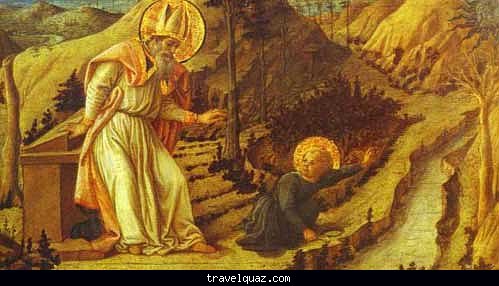
History’s Biggest Heresies | Christianity Today travelquaz

RESTORED APOLOGETICS {LDS/MORMON STUDIES, EVIDENCES & POLEMICS … travelquaz

Maybe You Like Them Too
- Marylou Nash – University of Colorado Boulder
- Palace Of Versailles Kingdom Of The Sun King
- The Authentic Yoga Retreat Where? Cumbria, England
- Fushimi Inari Shrine in Kyoto
- Tofuku-ji Temple in Kyoto